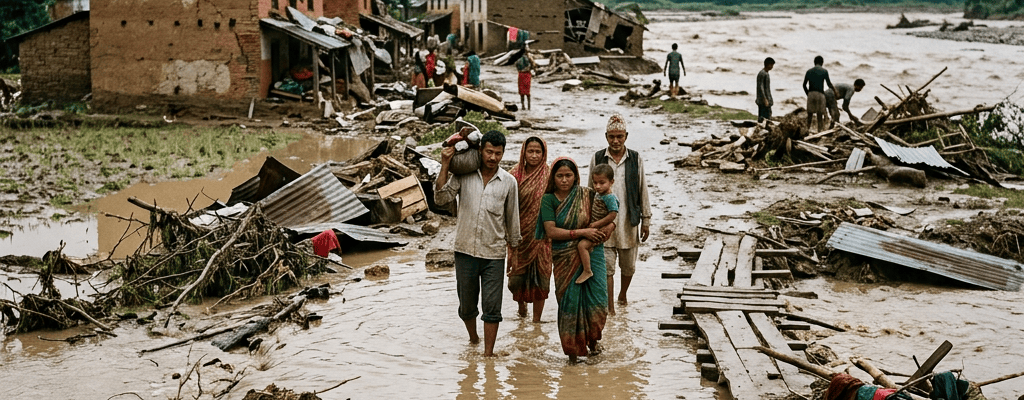

In late August 2026, a devastating flash flood tore through northern and central Nepal, leaving a trail of destruction that claimed more than 1,200 lives and left thousands missing. Triggered on August 26 by a massive ice-rock avalanche near the Nepal-Tibet border, the disaster sent walls of water, mud, ice, and debris surging down the Bhote Koshi and Trishuli rivers. Entire communities were wiped out, hydropower plants were destroyed, and infrastructure across multiple districts was shattered. Prime Minister Balendra Shah described it as “not an ordinary” event and explicitly linked the catastrophe to climate change, calling on the international community to confront the escalating risks facing Himalayan nations.
The Himalayas, home to some of the world’s highest peaks and most fragile ecosystems, are warming at nearly twice the global average rate. This accelerated heating has profound consequences. According to the United Nations, Nepal’s mountains lost close to one-third of their ice cover in just over 30 years due to rising temperatures. Glaciers are retreating rapidly, permafrost is thawing, and steep slopes once stabilized by ice are becoming unstable. Scientists note that while it is difficult to attribute any single event solely to climate change, the conditions that made this disaster possible—melting ice, weakened rock faces, and increased meltwater—are classic signatures of a warming climate.
Experts describe the August event as a classic high-mountain compound disaster. A large section of glacier and rock collapsed, likely destabilized by warming that reduced ice support on steep slopes and increased meltwater infiltration. The resulting avalanche cascaded into the valley, generating a powerful debris flow that raised water levels by as much as nine meters in places within minutes. Similar, smaller-scale events have occurred in recent years across the Hindu Kush Himalaya, including glacial lake outburst floods and ice avalanches, signaling a worrying trend. Farooq Azam, a cryosphere specialist at the International Centre for Integrated Mountain Development, and other researchers emphasize that rising temperatures are making the region’s ice and rock far more vulnerable than in the past.
The human cost has been immense. More than 84,000 people across six districts were affected, many living in already vulnerable communities. Hydropower facilities—critical to Nepal’s energy supply and economy—suffered heavy damage, wiping out roughly 10 percent of generation capacity. Rescue efforts have been complicated by ongoing weather risks, difficult terrain, and the formation of temporary lakes behind landslide debris. Beyond the immediate tragedy, the disaster underscores a broader truth: mountain communities that contribute least to global greenhouse gas emissions are among the first and hardest hit by its consequences.
Nepal’s experience is a stark warning. As glaciers continue to thin and permafrost thaws, the frequency and severity of such cascading hazards are expected to rise. Early warning systems, better land-use planning, and international climate finance for adaptation are urgently needed. The floods of 2026 are not an isolated anomaly; they are a preview of the escalating risks climate change is bringing to the roof of the world. Global action to cut emissions and support vulnerable regions is no longer optional—it is essential to prevent future catastrophes of this scale.
Discover more from Sustrainegrenity
Subscribe to get the latest posts sent to your email.
