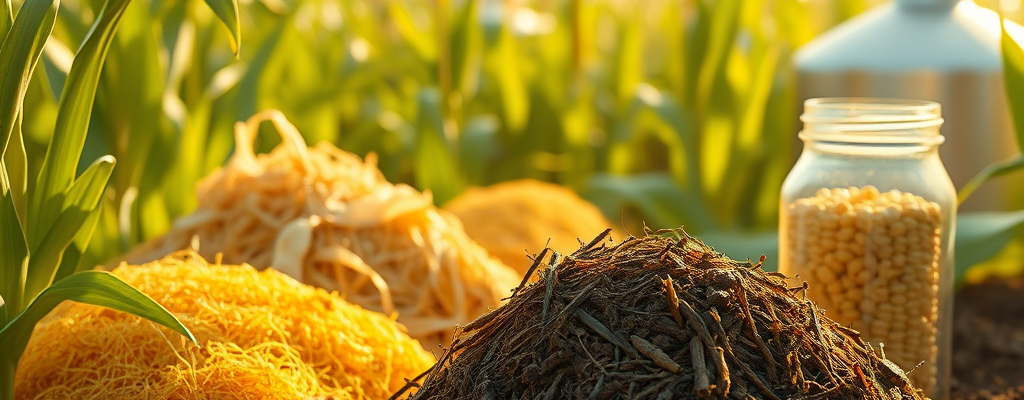
Discover how farmers, innovators, and sustainability leaders are transforming corn waste — husks, cobs, and stalks — into bioplastics, bioenergy, compost, and more. Upcycling corn waste is fueling the circular economy and reducing carbon footprints.🌽
🌾 The Hidden Potential in Corn Waste
Each year, millions of tons of corn waste — from husks and cobs to stalks and processing residues — are left behind after harvest or food production. Too often, these leftovers are burned or discarded, releasing CO₂ and contributing to air pollution.
But in the emerging circular economy, this waste is a resource in disguise. With the right technologies and creativity, corn by-products can be upcycled into valuable materials, renewable energy, and soil-building products that benefit both people and the planet.
🔄 From Residue to Resource: Smart Ways to Upcycle Corn Waste
🪴 1️⃣ Compost & Soil Regeneration
Chopped corn stalks and leaves make excellent compost material. Returning them to the soil improves structure, increases moisture retention, and boosts long-term fertility.
For home gardeners, dried corn husks can be used as natural mulch to reduce weeds and protect plant roots.
🔥 2️⃣ Bioenergy & Biochar
Corn waste can be transformed into clean energy:
- Bioethanol from corn stover is a sustainable fuel alternative.
- Biogas from anaerobic digestion powers farms and rural grids.
- Biochar from corn cobs enriches soil while locking away carbon.
👉 Did you know? One ton of corn cobs can produce up to 500 kg of biochar — a natural carbon sink.
🧫 3️⃣ Bioplastics & Packaging
Corn by-products are now being upcycled into biodegradable materials:
- Corn starch → PLA bioplastic for compostable cups and containers.
- Corn husk fibers → eco-packaging trays.
- Corn cob powder → eco-friendly abrasives and cosmetic exfoliants.
These innovations help reduce plastic pollution and support a regenerative materials economy.
🍄 4️⃣ Mushroom Cultivation & Animal Feed
Corn cobs and husks serve as ideal substrates for growing gourmet mushrooms like oyster or shiitake varieties.
Meanwhile, corn processing residues such as gluten meal, germ, and bran are valuable animal feed ingredients, closing nutrient loops on farms.
🧴 5️⃣ Green Chemistry Innovations
Corn waste is being used in biorefineries to produce:
- Lactic acid for eco-friendly textiles and biopolymers
- Xylitol (a natural sweetener) from corncob hemicellulose
- Furfural — a bio-based chemical for resins and solvents
These applications turn agricultural by-products into the raw materials of a bio-based economy.
🎨 6️⃣ Creative & Cultural Upcycling
At the community level, corn waste inspires beautiful, practical crafts:
- Corn husk dolls, paper, and baskets
- Corncob candles or planters
- Natural kitchen scrubbers and utensils
These handmade products keep waste out of landfills while preserving local craftsmanship.
🌍 Why Upcycling Corn Waste Matters
✅ Reduces emissions: Avoids burning residues and cuts CO₂ release.
✅ Supports farmers: Creates extra income streams and rural jobs.
✅ Boosts soil health: Returns organic matter and nutrients to the earth.
✅ Builds circular economies: Turns “waste” into valuable raw material.
✅ Drives innovation: Fuels bioplastics, bioenergy, and green chemistry sectors.
🚜 The Bigger Picture: A Regenerative Future
As sustainability professionals, we often say: waste is a design flaw. Corn waste shows us how redesigning agricultural systems through upcycling can turn a linear “take-make-dispose” model into a closed-loop cycle of renewal.
From bioplastics and biochar to compost and community crafts, every part of the corn plant can find a second life.
🌱 In nature, nothing is wasted — everything is repurposed. Upcycling corn waste helps us align our economy with that principle.
✳️ Key Takeaways
- Corn waste is a valuable resource for energy, packaging, compost, and materials.
- Upcycling supports climate goals, rural livelihoods, and soil health.
- Innovation and circular design are unlocking new economic opportunities.
💬 Final Thought
Whether you’re a farmer, entrepreneur, or sustainability enthusiast, corn waste is an untapped opportunity to turn yesterday’s leftovers into tomorrow’s solutions.
Discover more from Sustrainegrenity
Subscribe to get the latest posts sent to your email.
