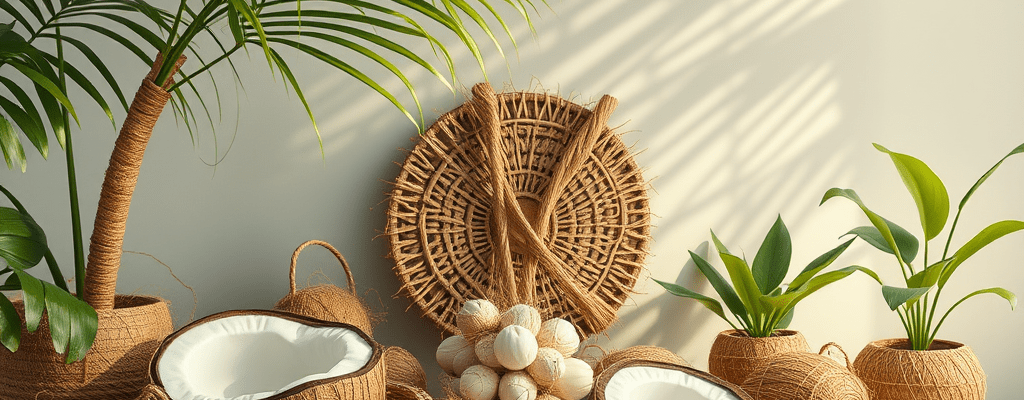
Upcycling coconut waste is one of the most eco-friendly and profitable ways to turn what’s often discarded (husks, shells, coir dust, water, etc.) into valuable products. 🌴
Below is a comprehensive guide showing how each part of the coconut can be reused, plus simple home and business-scale ideas.
🥥 1️⃣ Understand Coconut Waste Streams
Coconut waste usually includes:
| Part | Description | Typical Waste Source |
|---|---|---|
| Coconut husk | Outer fibrous layer | Dehusking / copra industry |
| Coir pith / coco peat | Fine dust from husk fiber extraction | Coir mills |
| Coconut shell | Hard inner shell under the husk | Copra & oil industries |
| Coconut water (discarded) | From mature nuts (not tender ones) | Oil processing |
| Coconut meat residue | After milk or oil extraction | Food processing |
| Coconut leaves & wood | Fallen fronds, trunks | Plantation or landscaping waste |
🌿 2️⃣ Upcycling Ideas by Material Type
🌾 A. Coconut Husk
- Coir fiber products – Extract fiber to make:
- Ropes, mats, brushes, doormats, mattresses, eco bags
- Mulch or compost – Shredded husk improves soil aeration and retains moisture.
- Erosion control mats – Coir nets are used to stabilize slopes and riverbanks.
- Biochar / activated carbon – Burn husks in low oxygen to create biochar for soil enrichment.
👉 Simple project: Soak husks, shred them, and dry for use as garden mulch or organic substrate.
🌱 B. Coir Pith / Coco Peat
A by-product of coir fiber extraction, coco peat is light, absorbent, and renewable.
Uses:
- Soil conditioner / potting mix – Excellent for retaining moisture.
- Seed starter blocks – Mix with compost and form into small blocks.
- Hydroponic growing medium – Sterilize and use as a soil substitute.
👉 Home tip: Rinse coco peat to remove salts before use in plants.
🔥 C. Coconut Shell
Extremely hard, dense, and full of potential.
Upcycle ideas:
- Activated carbon (used in filters & cosmetics)
- Charcoal briquettes (eco-friendly fuel)
- Crafts & décor:
- Polished shell bowls, lamps, jewelry, planters, candle holders.
- Buttons and accessories – Cut, sand, and polish for sustainable fashion.
👉 DIY idea: Cut shell halves, sand smooth, and use as bowls or tealight holders.
🧃 D. Coconut Water (from mature nuts)
When not suitable for drinking:
- Ferment into vinegar – Natural coconut vinegar used in cooking & cosmetics.
- Biofertilizer / compost liquid – Mix with molasses & EM (Effective Microorganisms).
- Biogas / bioethanol feedstock – Industrial fermentation applications.
👉 Simple fermentation recipe:
- Collect coconut water from mature nuts.
- Add sugar or jaggery (1 Tbsp per cup).
- Cover with cloth and let ferment for 2–3 weeks → becomes coconut vinegar.
🥥 E. Coconut Meat Residue
(Left after extracting milk or oil)
Uses:
- Animal feed – Dried and mixed into feed for cattle or poultry.
- Desiccated coconut flour – Dry, grind, and use in baking.
- Compost – High in nutrients, enriches soil.
- Bioenzyme / natural cleaner – Mix residue with citrus peels and jaggery for eco-cleaning solution.
🌴 F. Coconut Leaves & Trunk
- Leaves: Weave into baskets, roofs (thatch), or compost.
- Trunk: Used for furniture, planks, or biochar production.
- Ash: Coconut shell ash is alkaline and can enrich soil or be used in soap making.
♻️ 3️⃣ Industrial-Scale Upcycling Opportunities
If you’re looking for business ideas:
| Product | Source | Market |
|---|---|---|
| Coco peat blocks | Coir pith | Horticulture export |
| Activated carbon | Shells | Filtration, pharma |
| Coconut fiber mats / ropes | Husk | Home décor, erosion control |
| Coconut shell crafts | Shell | Eco-souvenir markets |
| Biochar / briquettes | Shell & husk | Renewable energy |
| Coconut vinegar / wine | Waste water | Food & beverage |
| Coir composite boards | Husk + resin | Furniture / construction |
🌸 4️⃣ Home-Scale Upcycling Projects
| Project | Materials | Method |
|---|---|---|
| Planter pots | Shell halves | Drill drainage hole; polish or paint. |
| Coconut candle holders | Shell halves | Pour wax inside; insert wick. |
| Coco peat mix | Coir dust + compost | Use as organic potting soil. |
| Natural scrubber | Husk fiber | Bind fibers together, use for cleaning dishes. |
| Eco-enzyme cleaner | Coconut residue + citrus peels + jaggery | Ferment 3 months. |
💡 Pro Tips
- Dry coconut waste before storage to prevent mold.
- Mix waste types (shell + fiber + compostables) for balanced compost.
- Avoid burning coconut waste openly — use controlled pyrolysis for biochar or briquettes.
- Partner with local farmers or artisans to close the recycling loop.
Some viable coconut-waste upcycling projects
- 🌿 Making coco-peat potting soil
- 🕯 Crafting coconut-shell candles
- 🔥 Making charcoal briquettes
- 🧴 Producing coconut-vinegar or enzyme cleaner
Discover more from Sustrainegrenity
Subscribe to get the latest posts sent to your email.
