1. Introduction
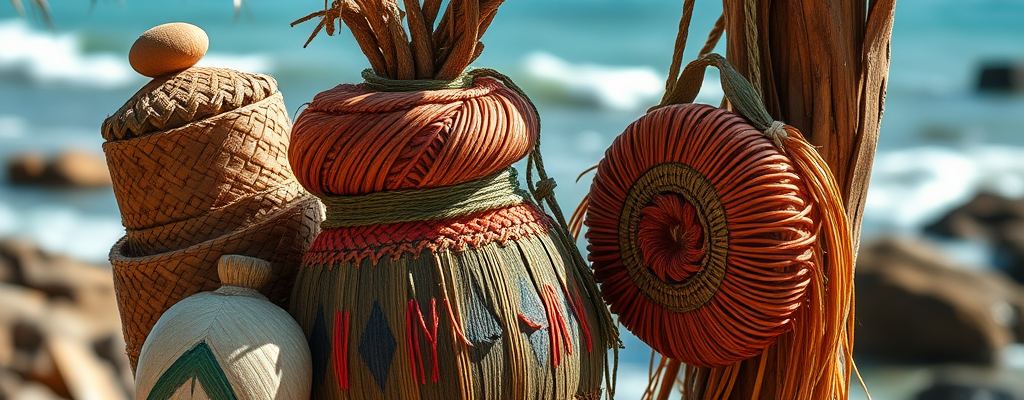
The vast region of Oceania — spanning Polynesia, Melanesia, Micronesia, and including Australia’s Indigenous cultures — is home to some of the world’s most remote island and coastal peoples. Their handicrafts reflect deep maritime connections, island-ecologies, and materials drawn from sea, bark, shell, fibre, wood and bone. In this chapter we explore major craft-forms, techniques, styles and sustainability dimensions in this island world.
2. Bark Cloth (Tapa), Weaving & Fibre Work


6
Materials & Environment
- Bark cloth (often called “tapa” or “kapa”) is made by stripping inner bark of trees (e.g., paper mulberry), soaking, then beating into cloth-like sheets. These are decorated and used for garments, ceremonial gifts and household uses. rjmkoeln.de
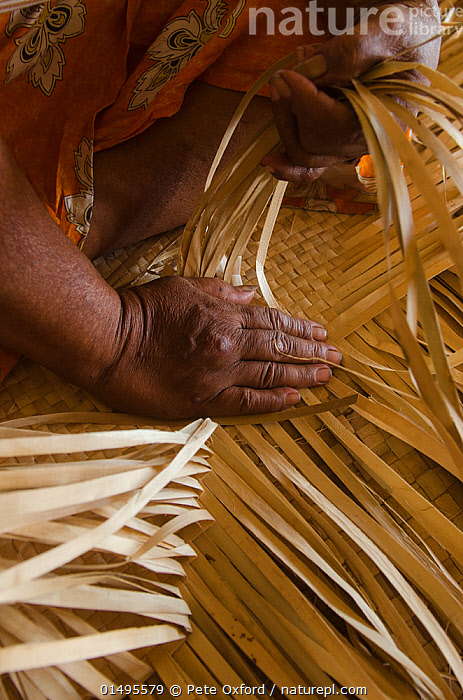
- Pandanus leaves, palm fronds, coconut husk fibres are common in weaving mats, hats, baskets and ritual items. lrd.spc.int+1
Techniques
- Beating and flattening bark-strips into sheets, then painting or stamping designs for tapa cloth. Living Oceans Foundation+1
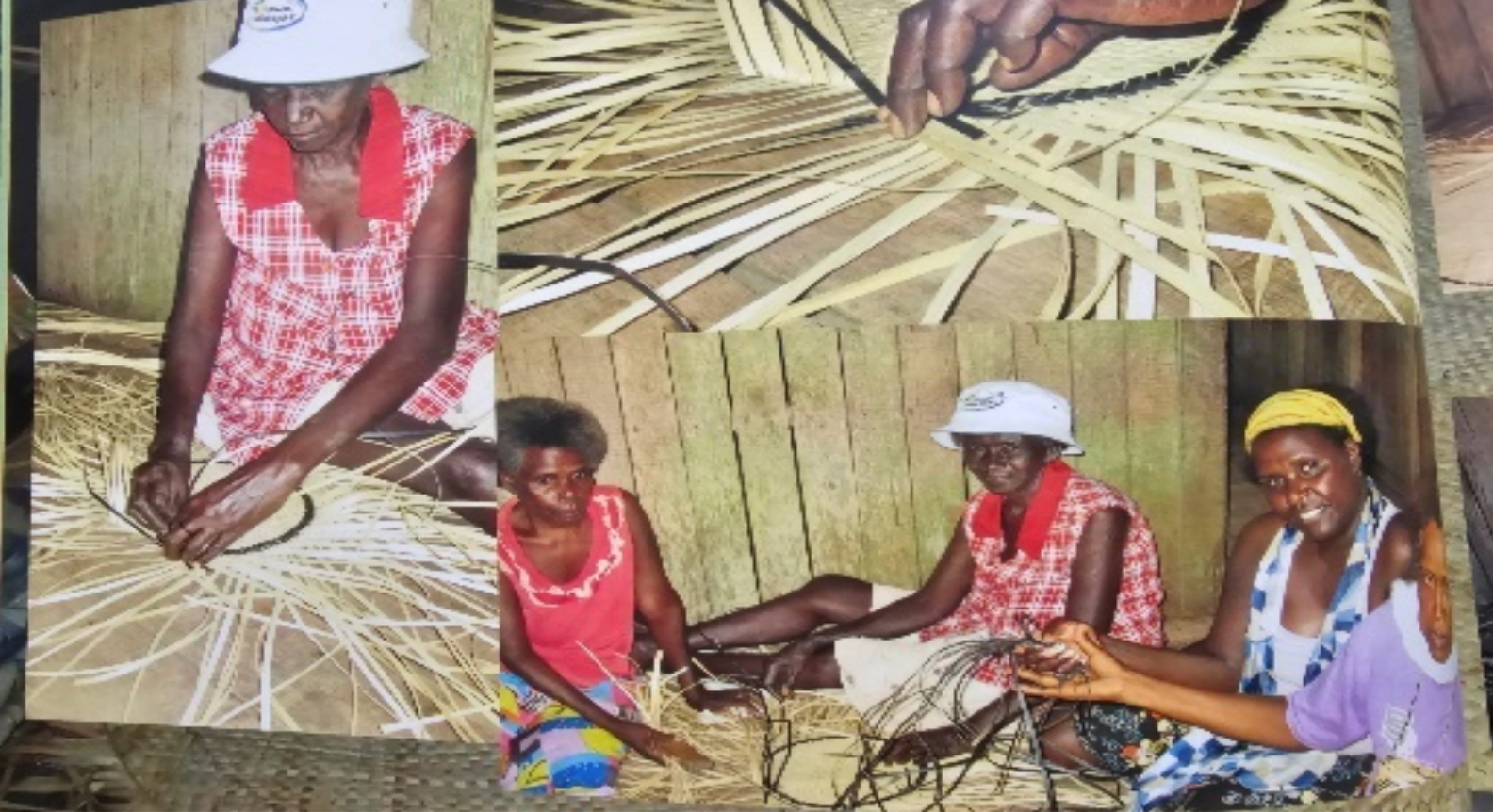
- Weaving mats and fibre items: plaiting pandanus leaves, weaving coconut-husk ropes (sennit), making baskets, fans and clothing accessories. Wikipedia
Regional Styles & Significance
- In Tonga, mats and tapa cloths are indispensable in ceremony: weddings, funerals, status events. The quality of weaving and decoration signals social respect. Living Oceans Foundation
- In Polynesia, weaving remains central: women weave blankets, mats, ornaments that are passed on generation to generation. ioa.factsanddetails.com
Sustainability & Cultural Continuity
- Fibre and bark-cloth practices are locally centred: materials harvested in island ecosystems, manual production, items often long-lasting or heirloom.
- Maintenance of weaving skills, inter-generational transmission and respect for harvesting cycles is crucial for craft sustainability.
- The crafts connect strongly to culture, ceremony and identity rather than just purely decorative commercial production.
3. Wood, Stone, Shell & Carving Traditions

6
Materials & Techniques
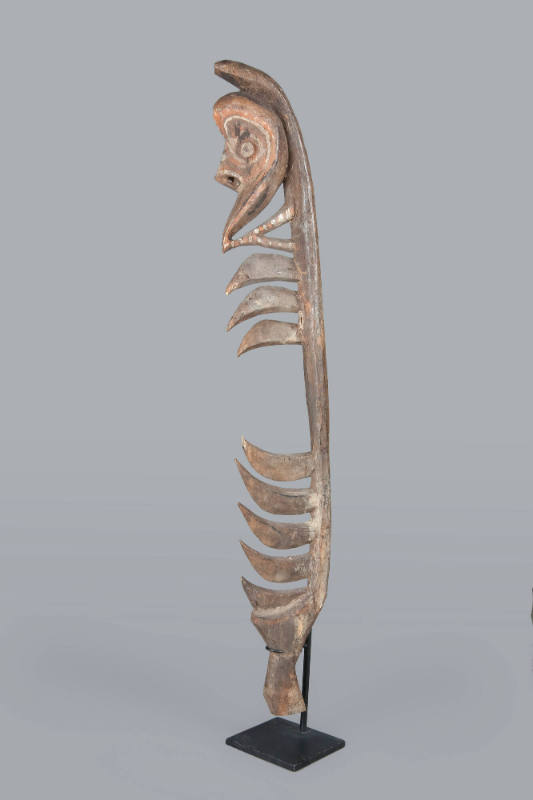
- Carving wood (hardwoods, coastal timbers, driftwood) into functional objects (canoe prows, paddles, bowls, masks), ritual sculptures or architectural elements.
- Use of shell, bone, volcanic stone, and shell inlay in decorative or ceremonial objects.
- Example: In Māori tradition of Poupou (carved wall-panels) the carver must be versed in tribal history and lineage. Wikipedia
Styles & Cultural Meaning
- In Melanesia (Papua New Guinea, New Ireland) carved figures used in ritual (Malagan ceremonies) are painted, adorned with fibre or shell and richly symbolic.
- In Polynesia and Micronesia, carving extends to accessories (pendants), decorative objects and navigational objects, all with strong spiritual or ancestral links.
Sustainability & Cultural Resilience
- When wood and shell materials are sourced responsibly (sustainable forestry, shell harvesting with consent, minimal impact), carving craft aligns with ecological stewardship.
- Carvers maintain deep knowledge of woods, tools, tools of production — preserving intangible heritage.
- Craftenabled livelihoods in remote island contexts support community resilience; ethical markets and recognition of provenance are important to avoid exploitative tourism/commodity traps.
4. Hybrid Objects, Weaving & Navigation-Linked Craft

6
Materials & Techniques
- Navigation and sea-voyaging traditions influence craft: for example braided sennit (coconut-husk cords) used in lashing canoes, but also woven into decorative belts. Wikipedia
- Complex textiles (quilting in Polynesia such as Tivaevae in the Cook Islands) sewn by women, passed as gift-quilts interwoven with community memory. Wikipedia
Styles & Regional Forms
- The Pacific island weave-craft is intimately linked to seascape: mats, blankets and garments reflect motifs of waves, fish, coasts, and the craft supports social ceremony.
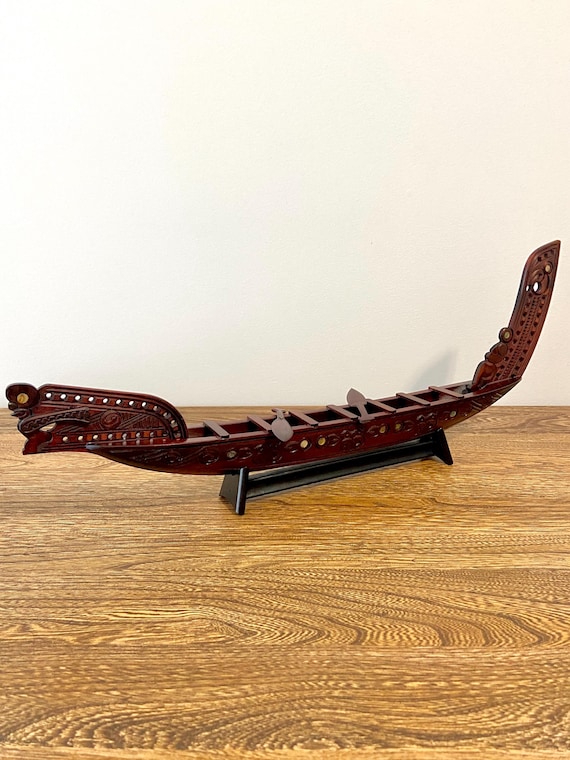
- Carved canoes, paddles and figures reflect mythic journeys, ancestral voyaging, and community identity.
- Jewellery and adornment from shell, bone or mother-of-pearl are made for everyday adornment and ceremonial occasions.
Sustainability & Cultural Dimensions
- Craft centered on navigation, sea ecology and island environments builds a respect for marine and island ecosystems — for instance, craft uses of coconut-husk, pandanus, shell rather than high-impact imported materials.
- Supporting these craft traditions supports island economies, reinforces cultural identity and can offer models for sustainable design in marine/coastal settings.
- Key challenge: climate-change impacts on island materials (sea-level rise, coral shell damage, forest loss for pandanus), demand for craft in tourism vs local meaning.
5. Cross-Regional Themes: Sustainability, Adaptation & Market
Sustainability
- Oceania crafts illustrate sustainable material practices: utilising local fibres (pandanus, coconut husk), bark cloth, wood from managed forests, shell and bone from local ecosystems.
- Craft production often small-scale, community-based, labour-intensive, designed for long-term use (ceremonial mats, carved objects) rather than disposable.
Adaptation & Pressures
- Island craft traditions face pressures: globalised tourism, imitation objects, loss of raw materials (tree-bark for tapa, pandanus decline), younger generation migration, climate change.
- But there is adaptation: island craft groups exporting, linking to cultural heritage tourism, cooperatives preserving techniques (e.g., the Falepipi he Mafola handicraft group, Niue). Wikipedia
Ethical & Cultural Respect
- Indigenous island craft is often ceremony-linked, has deep cultural meaning; it is vital to respect context, source, community ownership.
- Sustainability here has social/cultural component: preserving craft skills, supporting the maker communities, preventing extraction or commodification without return to the community.
- In remote island settings, craft can contribute to livelihoods, cultural regeneration and environmental stewardship — all integral to sustainability frameworks.
6. Summary & Reflection
The handicrafts of Indigenous Oceania embody a close union of sea, land, material and culture. From a beaten-bark tapa cloth, a finely woven pandanus mat, to a carved canoe prow, these are not mere decorative items — they are cultural artefacts, ecological statements, and indicators of sustainable craft practice. For a sustainability professional, the key lessons:
- Material-site connection: island craft underscores how material sourcing, environment and craft skill are deeply linked.
- Durability & meaning: objects made for ceremony, identity and longevity contrast with throwaway consumer goods.
- Cultural sustainability: craft sustains community, heritage, identity, inter-generational transfer of skill and meaning.
- Economy of craft: craft supports remote island livelihoods, lessening dependence on extractive economies if done ethically.
- Adaptation & resilience: island craft traditions adapt to modern challenges (e.g., climate change, market shifts) while retaining core identity — a strong model for sustainable craft futures.
7. Suggested Field-Visits & Further Reading
- Visit Polynesian weaving and carving centres in Tahiti, Samoa or the Cook Islands to witness tapa-making, pandanus mat-weaving and carving workshops.
- Study Māori carving traditions in Aotearoa (New Zealand) to understand spiritual and communal dimensions of woodcarving.
- Research Pacific craft cooperatives and craft-economy programmes for insight into sustainable craft markets in island contexts (e.g., Niue’s Falepipi group).
By examining the handicraft traditions of Asia and Oceania with a sustainability lens — covering materials, techniques, styles, culture and economy — you can present to your readers both the richness of Indigenous craft and the ways these traditions model sustainable production and cultural resilience.
Discover more from Sustrainegrenity
Subscribe to get the latest posts sent to your email.
