
Scope 1 emissions are direct GHG emissions from sources that your company owns or controls.
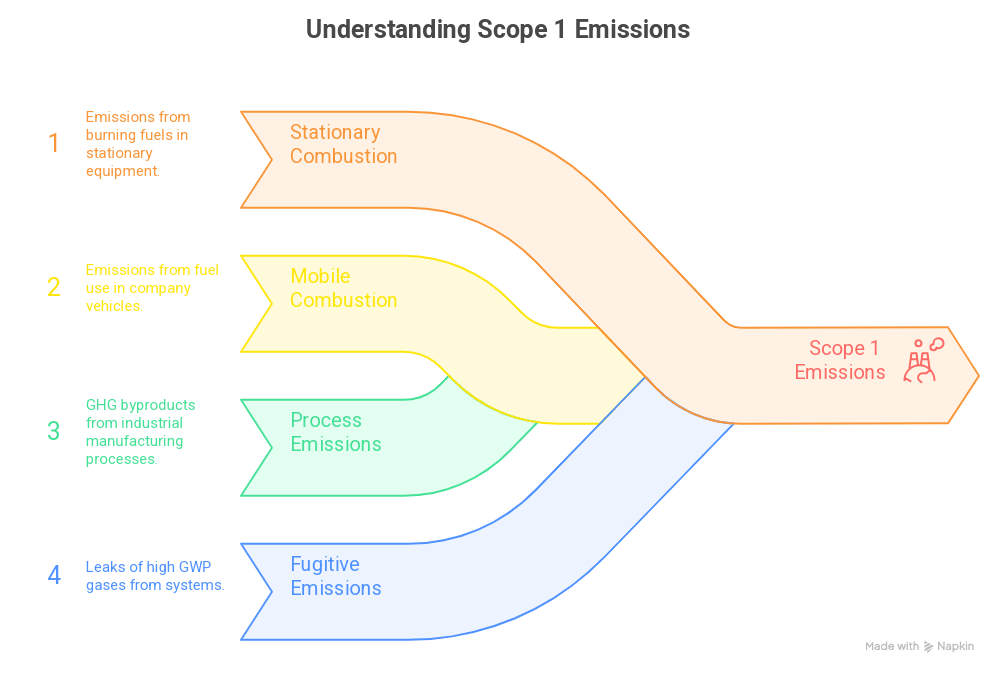
| Source Category | Required Activity Data |
| 1. Stationary Combustion | Volume/Mass of Fuel Consumed: Total amount of fuels (natural gas, oil, coal, etc.) burned in stationary equipment like boilers, furnaces, and generators on-site, typically measured in kWh, liters, or cubic meters. |
| 2. Mobile Combustion | Volume/Mass of Fuel Consumed: Total amount of fuels (gasoline, diesel, jet fuel, etc.) burned in company-owned or controlled vehicles (fleet cars, trucks, heavy machinery). |
| 3. Process Emissions | Volume/Mass of Material Used/Produced: Data on materials used or produced where GHG is a byproduct of the industrial process itself (e.g., CO₂ from cement or chemical manufacturing). |
| 4. Fugitive Emissions | Type and Mass of Refrigerants/Gases Used: Records of the mass (kilograms) of specific high Global Warming Potential (GWP) gases (e.g., HFCs, PFCs, SF₆) added to or leaked from refrigeration, air conditioning, and fire suppression systems. |
Scope 2: Energy Indirect Emissions (Purchased Energy)
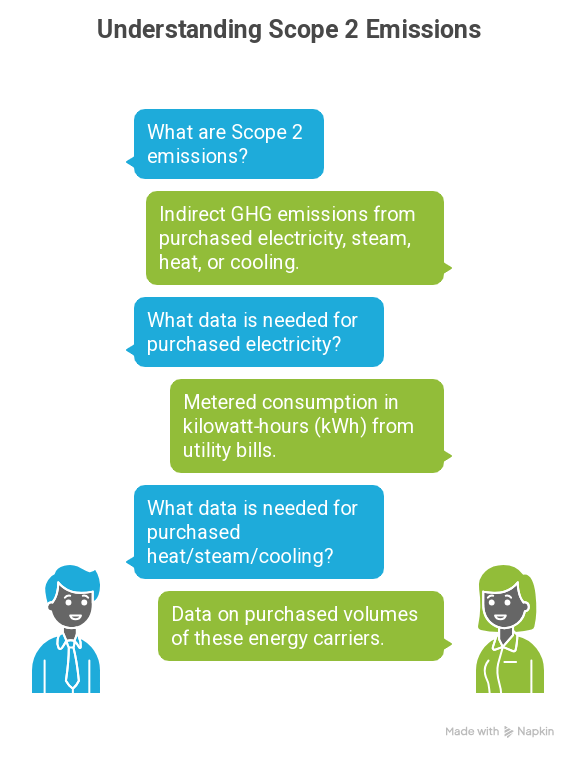
Scope 2 emissions are indirect GHG emissions from the generation of purchased electricity, steam, heat, or cooling that your company consumes.
1. Purchased ElectricityTotal Electricity Consumed: Metered consumption of purchased electricity, measured in kilowatt-hours (kWh), obtained from utility bills.
2. Purchased Heat/Steam/CoolingTotal Volume/Energy of Heat, Steam, or Cooling Consumed: Data on purchased volumes of these energy carriers.
Calculation Requirement (GRI/GHG Protocol): To comply with best practices, you typically need to report using both the location-based method (using average grid-region emission factors) and the market-based method (using supplier-specific factors, such as from power purchase agreements or renewable energy certificates).
Scope 3: Other Indirect Emissions (Value Chain)
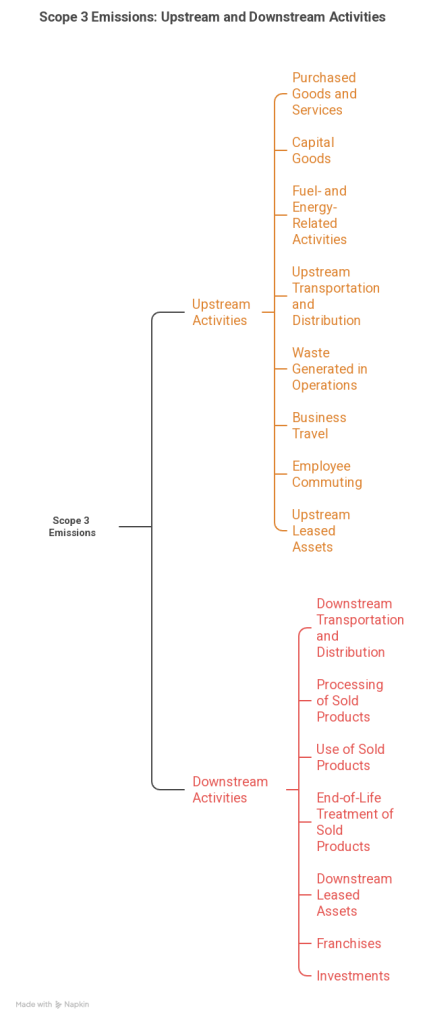
Scope 3 emissions are all other indirect emissions that occur in your company’s value chain (both upstream and downstream) and are not included in Scope 1 or Scope 2.
These emissions are split into 15 categories, and the required data will vary. You should prioritize the categories that are most material to your business.
| Upstream Activities (Purchased/Acquired) | Downstream Activities (Sold/Disposed) | Required Activity Data Examples |
| 1. Purchased Goods and Services | 9. Downstream Transportation and Distribution | Monetary Spend on materials, components, and services, or Mass/Volume of materials purchased. |
| 2. Capital Goods | 10. Processing of Sold Products | Monetary Spend on capital assets (e.g., buildings, equipment). |
| 3. Fuel- and Energy-Related Activities (not in Scope 1 or 2) | 11. Use of Sold Products | kWh of T&D losses for purchased energy, or Volume of Fuel production/transport. |
| 4. Upstream Transportation and Distribution | 12. End-of-Life Treatment of Sold Products | Mass of product or Distance shipped by third-party logistics (by mode of transport). |
| 5. Waste Generated in Operations | 13. Downstream Leased Assets | Mass of Waste by type (recycled, landfilled, incinerated). |
| 6. Business Travel | 14. Franchises | Distance traveled (e.g., air miles, car miles) for employee business trips. |
| 7. Employee Commuting | 15. Investments | Distance traveled (e.g., daily commute distance or modal split). |
| 8. Upstream Leased Assets | Monetary Spend or specific activity data for the leased asset. |
Discover more from Sustrainegrenity
Subscribe to get the latest posts sent to your email.
