
In this blog we explore the vibrant, resource-rich handicraft traditions of Indigenous communities across Africa, highlighting how materials drawn from land, craft techniques handed down through generations, and culturally meaningful forms come together in sustainable practice. We’ll look at major craft categories: basketry & fibre work, textiles & appliqué, pottery & ceramics, wood & metal carving, and beadwork & adornment — considering how they relate to environment, identity and economy.
1. Introduction
Africa is home to a vast diversity of Indigenous peoples and craft traditions — from the coastal palms of West and East Africa, to the savannas and highlands, to the deserts and equatorial forests. Each environment offers raw-materials and constraints that have shaped the techniques and styles of handicraft. These artisanal practices are not merely aesthetic—they embed knowledge about environment, materials, cultural identity and sustainable livelihood. For a sustainability professional, these crafts offer models of local materials, low-carbon processing, circular practices and cultural continuity.
2. Basketry & Fibre Works


6
Materials & Environment
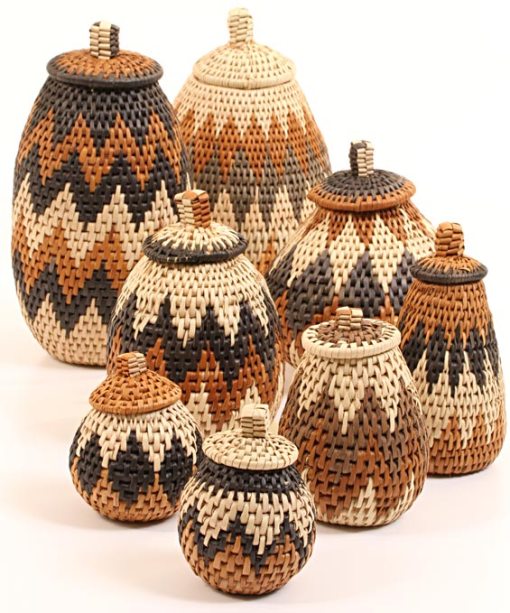
Many African basket and fibre crafts start with locally available plant-materials: palm fronds (e.g., ilala palm in KwaZulu Natal) africanhome.co.za+2geography.name+2, sisal, raffia, reeds and grasses africansahara.org+1. These materials are hand-processed (stripped, dyed, dried) and woven, plaited, coiled or twined into containers, mats, hats, baskets.
Techniques
Two primary basket-making techniques are commonly used:
- Plaited basketry: plant strands soaked and then woven, twined or twisted. geography.name+1
- Coiled or sewn basketry: a continuous strip (grass/palm) stitched around previous rows. geography.name+1
In many African communities, these skills are passed from mothers to daughters; the patterns and motifs often carry cultural meaning. africanhome.co.za+1
Styles & Significance
- In South Africa’s Zulu tradition, the “ukhamba” baskets (beer-serving vessels) are coil-woven from ilala palm and used in ceremonial contexts. africanhome.co.za
- In West Africa (e.g., Ghana, Burkina Faso) the Bolga baskets are made from elephant grass and dyed vibrant colours for both utility and aesthetic.
- In Angola, palms and sisal are woven with African motifs and abstract patterns, showing both functional and artistic dimensions. africansahara.org
Sustainability & Cultural Continuity
Because the raw materials are local and renewable, and the labour is hand-based, basketry exemplifies an environmentally light form of craft production. The skill transmission across generations sustains intangible cultural heritage. At the same time, many basket-weaving communities earn supplementary income through craft sales, linking cultural resilience with economic sustainability.
3. Textiles, Weaving & Appliqué
6
Materials & Techniques
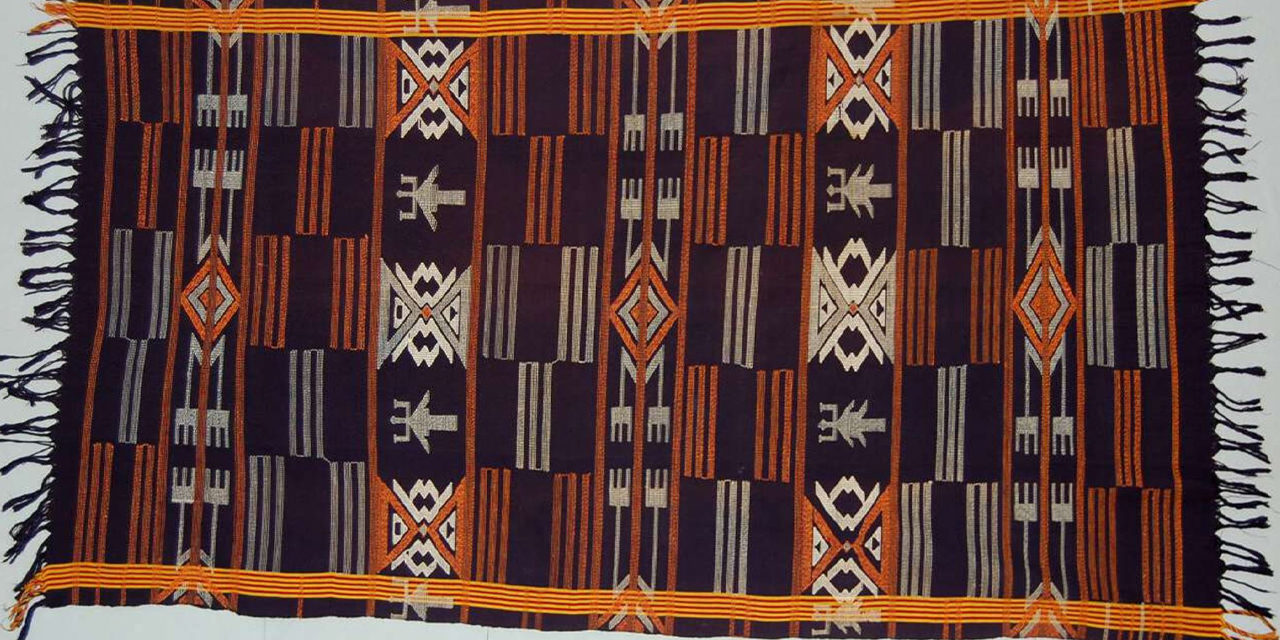
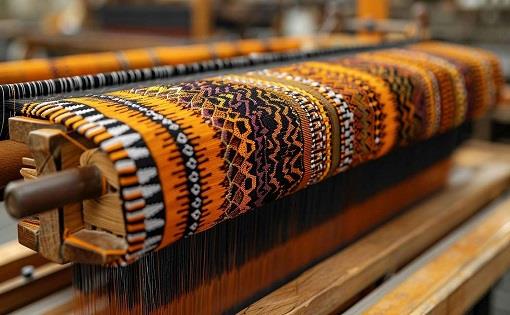
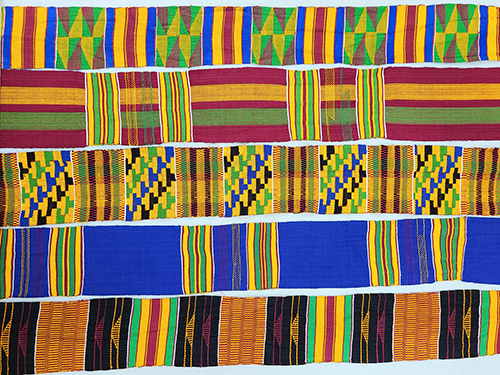
Textile traditions in Africa draw from locally grown or harvested fibres (cotton, raffia, hemp) and use traditional looms and dyeing techniques. For example, the Akwete cloth of Igboland (Nigeria) is woven from raffia or cotton and features motifs deeply embedded in cultural meaning. Wikipedia Appliqué and embroidery techniques are also common. Bead and applique decoration complement weaving. Tuzmo
Styles & Region
- In West Africa, richly patterned textiles such as kente (Ghana) or Akwete (Nigeria) carry social and ceremonial significance — cloth as identity, as status symbol, as gift.
- In East and Southern Africa, weaving baskets or mats may overlap with textile techniques — for example mats woven from grasses may carry decorative motifs or dyed stripes.
- Colour, pattern and texture are not just aesthetic but encode lineage, clan, regional identity and sometimes myth.
Sustainability & Cultural Significance
Textile production often remains local, uses low-tech looms and natural dyes, and supports community employment. In many cases, artisan cooperatives work to revive traditional weaving among youth to prevent loss of knowledge. The connection between land (growing fibre), craft (weaving) and market (income) makes textiles a key arena for sustainable craft interventions.
4. Pottery & Ceramics

6
Materials & Technique Foundations
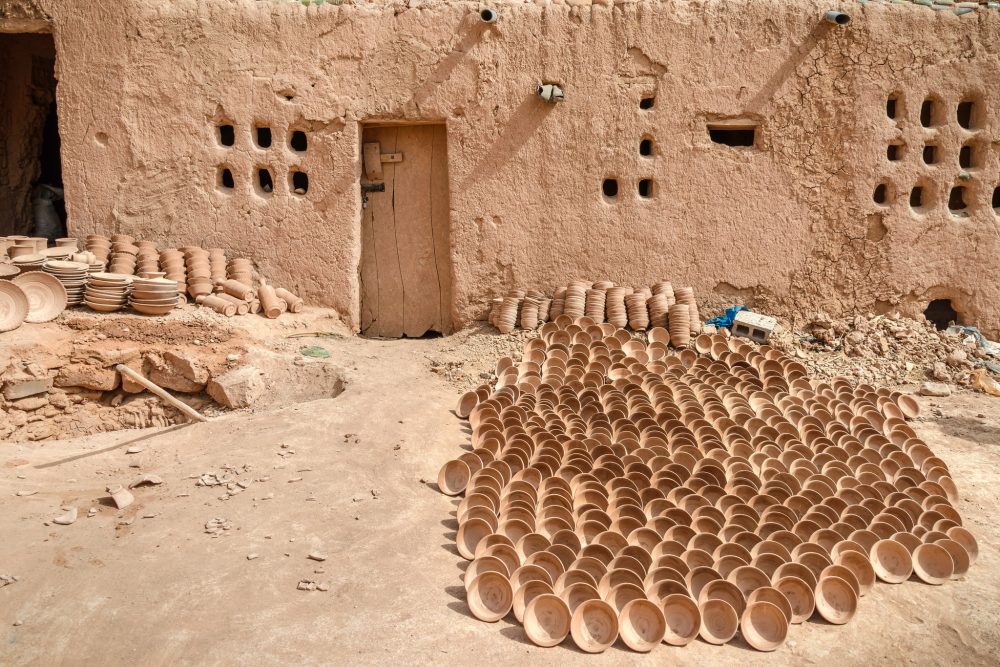
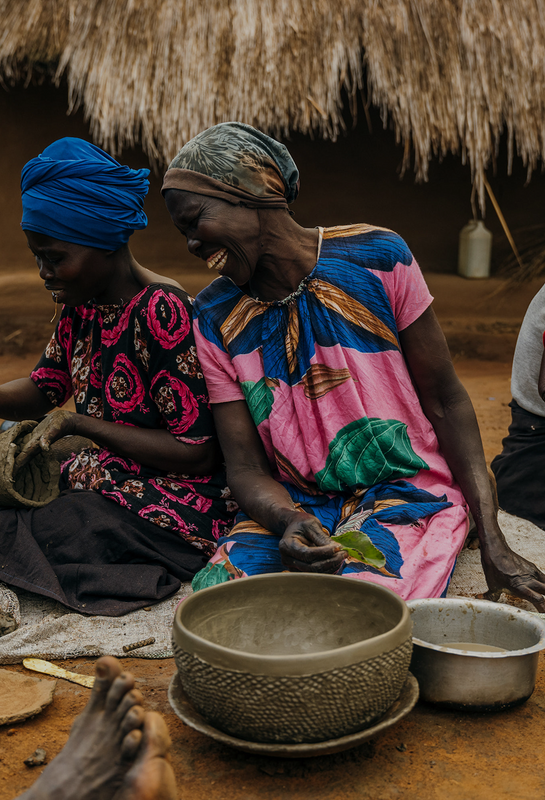
Indigenous potters across Africa dig local clay, temper it (e.g., with sand, grog), hand-build vessels by coiling or pinching, and fire them in simple kilns or open pits. These vessels serve cooking, storage and ceremonial use. Crafts for instance in South Africa emphasise training and capacity building for traditional pottery artisans. NAC
Styles & Regional Forms
- In West Africa (e.g., Benin) terracotta pieces are made — plates, bird-whistles, decorative vessels — and form part of cultural and ritual life. Anesvad
- In rural communities across Africa, clay pots may be decorated with incised motifs, painted slip, burnished surfaces; forms vary from daily cooking pots to ceremonial urns.
Sustainability & Cultural Dimensions
Pottery uses local materials and ambient firing, which reduces transport and industrial energy footprint. The craft engages local know-how and embodies cultural heritage. Supporting potters through capacity-building and market access helps sustain both craft and livelihoods.
5. Wood, Metal & Carving


6
Materials & Techniques
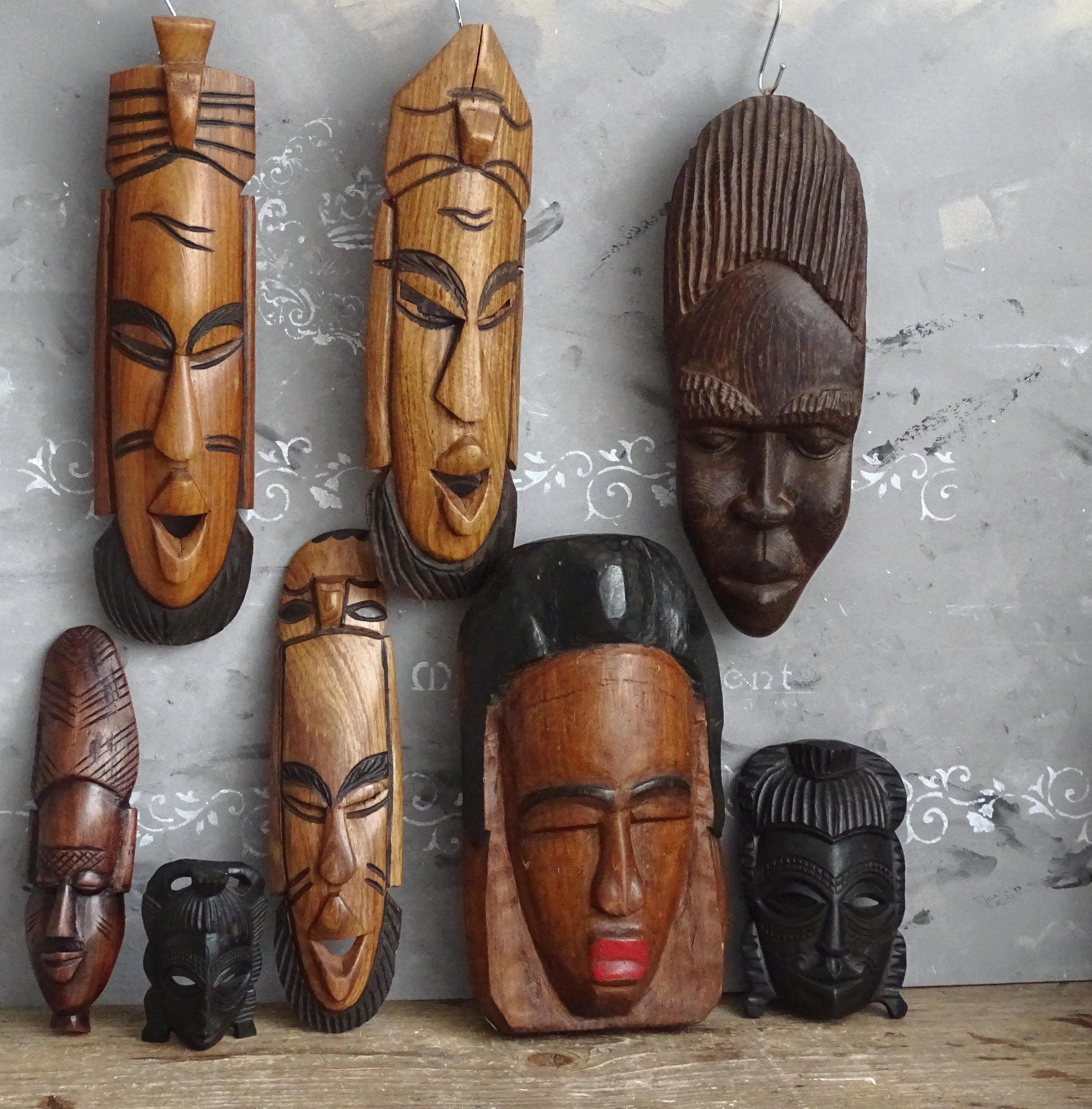
Carving wood, working with metal (brass, copper), making masks, figurines, utilitarian objects are central to many African craft traditions. For example, in Benin, wood-carvers (known as atinkpato) make statuary often with spiritual and ritual significance. Anesvad Others carve wood for decorative doors, tables, musical instruments.
Regional Styles & Cultural Meaning
- In West Africa, the royal art of the Kingdom of Dahomey (Benin) produced high-level brass and wood crafts with symbolic imagery. Anesvad
- Carved masks and figures often embody spiritual beings, ancestors, or myths, and play a role in ritual, ceremony or community identity.
- Metal smithing (bronze, brass) in parts of Africa is a high-skill craft with historical depth, linking craft to social status and heritage.
Sustainability & Cultural Resilience
Working with locally sourced hardwoods and recycled metals can align with low-impact material sourcing (though sustainable forestry and ethical metal sourcing are important). Ensuring that carving and metal-work traditions continue means preserving skills and ensuring community incomes so that artisans can stay in the craft rather than migrating.
6. Beadwork, Adornment & Jewelry


6
Materials & Technique
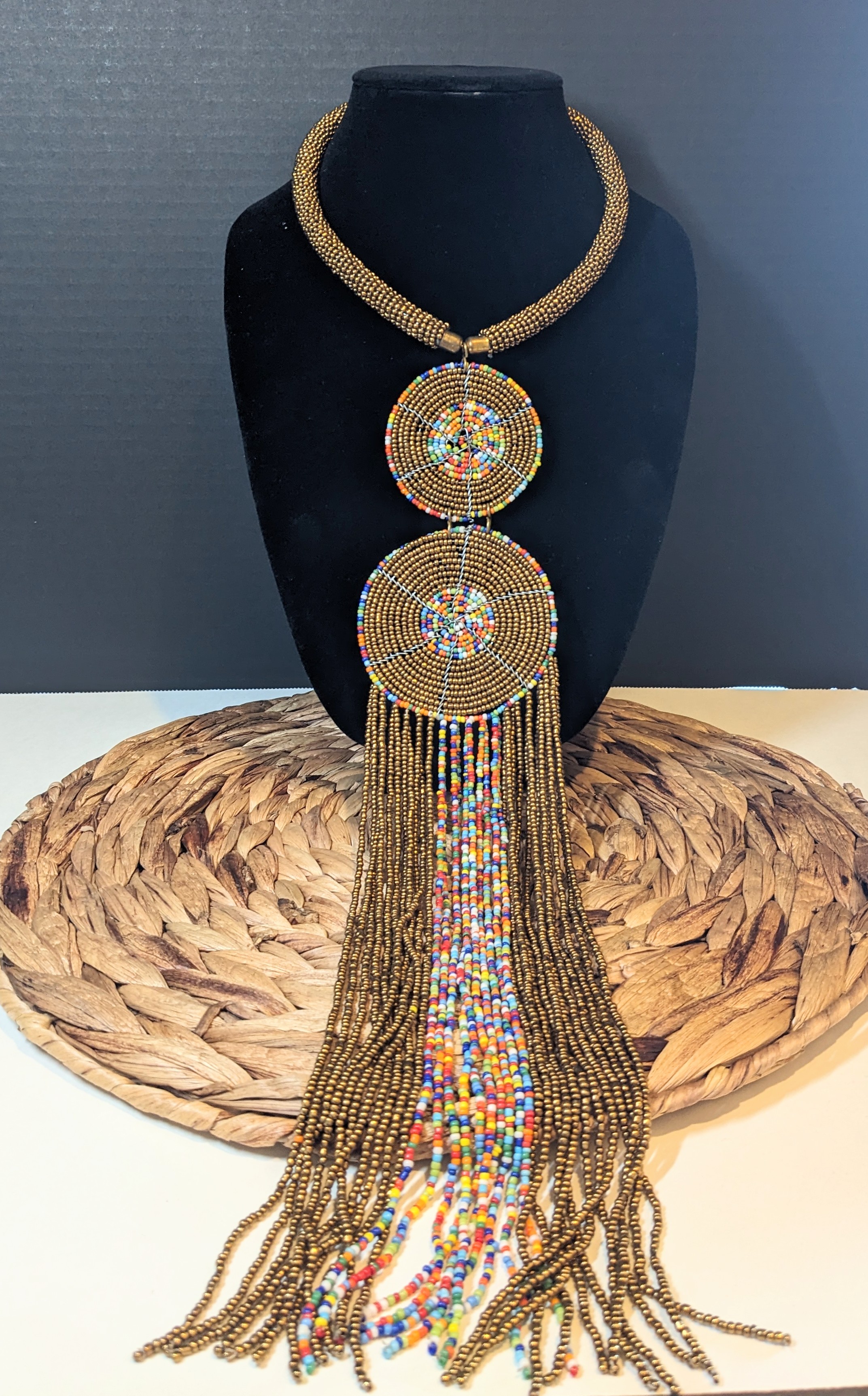
Beadwork is ubiquitous across many African Indigenous communities: glass beads, shells, seeds, metal beads are strung, embroidered or woven into jewellery, clothing adornments, belts, headgear. Colour and pattern hold meaning in many cases — signifying age, marital status, clan membership or ritual role. Tuzmo
Styles & Significance
- Among the Zulu, Sotho, Venda, Ndebele (Southern Africa), bead-patterns are part of identity and communication: specific colours and designs can indicate social messages. Tuzmo
- In East Africa (Maasai, Samburu) beadwork is part of life-cycle events: weddings, rites of passage, community membership; bracelets, collars, belts, sandals might be richly adorned.
- West Africa likewise uses beads, shells and metal in jewellery; objects may be for trade, prestige or ceremonial use.
Sustainability & Cultural Value
Beadwork often uses small amounts of material but high skill, and supports women’s employment, small-scale local craft economies, and cultural continuity. Working with eco-friendly beads (recycled glass, seed beads made locally) and ensuring fair pay supports sustainable craft ecosystems.
7. Cross-Regional Themes: Sustainability, Adaptation & Market
Sustainability
Across Africa’s Indigenous handicrafts we see consistent themes: use of local raw-materials, hand labour and small-scale production, craft embedded in community and environment. This aligns with low-carbon, local-economy principles of sustainable production. For example, basketry using palm fronds or raffia avoids heavy industrial inputs. geography.name+1
Adaptation & Market Pressures
However, many African handicraft traditions face pressures: globalised mass-production, cheap imports undermining artisan income; raw-material shortages due to deforestation or land-use change; young people migrating away from villages. Projects such as the Ubumba Pottery Project in South Africa illustrate efforts to support skill development and craft livelihoods. NAC
Ethical Considerations & Cultural Respect
As with Indigenous crafts globally, it is crucial to approach African handicrafts with respect for maker, culture, provenance and environment. Supporting Indigenous-artisan cooperatives, ensuring fair compensation, recognising cultural intellectual property (patterns, symbols), and avoiding exploitation or mis-appropriation are essential. Craft tourism and export markets must be designed to support—not undermine—community resilience.
8. Summary & Reflection
Handicrafts of Africa are deeply woven with environment, culture, identity and economy. When one holds a finely coiled basket made from palm-fronds, a vibrant textile woven on a local loom, a carved wooden mask, or a beaded collar worn as ceremony, one holds a tangible locus of knowledge: about materials, place, community, meaning. For a sustainability professional, key lessons include:
- Material-site connection: sustainable craft often rooted in local ecosystems and renewable materials.
- Skill and knowledge value: Hand-made, skill-intensive production is meaningful, sustainable and culturally rich.
- Cultural sustainability: Craft is as much about heritage, identity, intergenerational transmission as about material output.
- Livelihood & economy: Artisan craft offers viable local income, which supports community resilience and reduces migration pressures.
- Resilience & adaptation: Craft traditions adapt (new markets, new materials, training) while preserving core identity — a model for sustainable innovation.
9. Suggested Further Reading & Field-Visits
- Benin artisanship: diversity in African handicrafts (ANESVAD) — overview of craft sectors, raw materials and artisan networks in Benin. Anesvad
- Indigenous Crafts of South Africa – Tuzmo — insight into techniques like coiling, beading, weaving in Southern Africa. Tuzmo
- Visiting craft markets, cooperatives or artisan villages in Ghana (Bolga baskets), South Africa (Zulu weaving), Kenya (Maasai beadwork) can ground your understanding of craft in place, material, people and sustainability.
By exploring African Indigenous handicrafts through technique, style, material and sustainability lens, we honour the makers, traditions and ecological wisdom embedded in craft. These practices are not relics—they are living systems of creativity, community and connection to land, with relevance for a global future of sustainable craft.
Discover more from Sustrainegrenity
Subscribe to get the latest posts sent to your email.
