
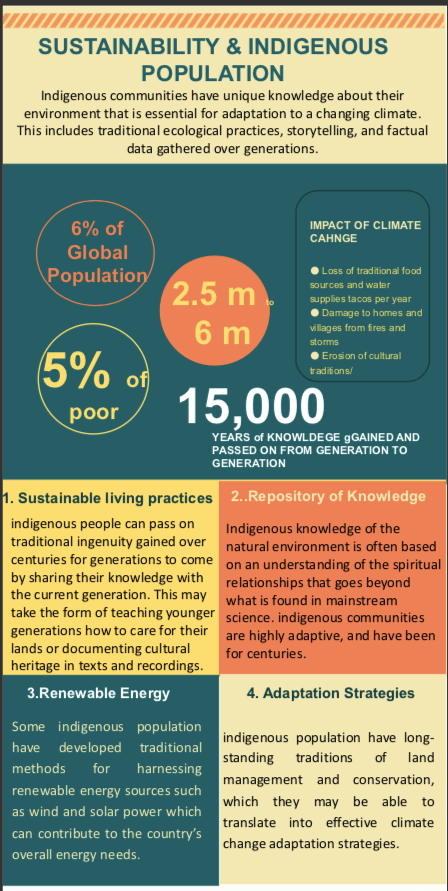
Indigenous people constitute constitute 6% of the global population and 15% of the poor. Of the 360 million indigenous people in the world, between 2.5 & 6 million reside in America.Investment in indigenous communities reduces socio economic disadvantages and provides access to traditional knowledge.
Indigenous people have a long and rich history of living in harmony with the natural world. Unfortunately, in recent years this way of life has come under threat from the effects of climate change. As the planet warms, indigenous peoples are finding it increasingly difficult to maintain their traditional lifestyles. This is particularly true for those who live in coastal areas
Effects of climate change on Indigenous communities
Indigenous communities are greatly affected by climate change. The most direct impact is on their environment and the resources they rely on for sustenance, such as water, food, and land. Climate change can also lead to increased wildfires and storms, which can cause damage to homes and villages. In addition, changes in temperature and weather patterns can upset traditional ways of life, leading to cultural erosion. For example, a study by the Indigenous Peoples’ Climate Change Assessment (IPCCA) found that in the Arctic, where Indigenous communities are already struggling with many challenges, climate change could lead to an increase in wildfires, melting of permafrost, and more extreme weather conditions.
To summarize some of the specific impacts of climate change on Indigenous communities include:
– Loss of traditional food sources and water supplies
– Damage to homes and villages from fires and storms
– Erosion of cultural traditions
What we can learn from Indigenous cultures
Indigenous communities have a lot to teach us about sustainable living and preserving traditional knowledge. By investing in these communities, we can reduce socioeconomic disadvantages and gain access to valuable insights about how to live more sustainably. Here are some key lessons we can learn from Indigenous cultures:
1. Sustainable living practices
Sustainability is a crucial component of our global ecosystem, and the principles of sustainable living are particularly important for indigenous peoples. In order for indigenous peoples to thrive, they must recognize and respect the delicate interconnection between all living things. This means that every element of their way of life must be grounded in principles of sustainability, from the traditional agricultural practices that grow their food and produce their medicinal herbs to the environmental protection efforts that preserve ancestral homelands. Furthermore, by following sustainable practices, indigenous peoples can share their traditions and wisdom with future generations. Whether it is through teaching younger generations how to care for their lands or documenting cultural heritage in texts and recordings, indigenous communities are an invaluable source of knowledge when it comes to sustainably living in harmony with our planet. Thus, it is essential that we continue to support the vital work of indigenous people as they strive to preserve ecological balance and pass on traditional ingenuity for generations to come.
2. Preserving traditional knowledge
Preserving traditional knowledge is essential for ensuring sustainability and supporting the rights of indigenous people. In many parts of the world, ancient forms of knowledge have been passed down through generations, helping communities to thrive in a time of great change and uncertainty. However, this knowledge is often at risk of being lost or ignored as modern society continues to evolve.
To preserve this rich heritage, we must first recognize its value and importance. We must also actively support efforts to collect, record, and share these precious traditions with the next generation. This can be done by supporting initiatives that work directly with indigenous communities, by listening carefully to their perspectives and experiences, and by learning from their knowledge and wisdom. In the end, preserving traditional knowledge is about creating a more equitable and sustainable future for all.
3. The importance of community investment
When it comes to sustainability, community investment is essential. By pooling our resources and working together, we can create a more equitable and just world where everyone’s needs are met. This can take a variety of different forms, from supporting indigenous communities to advocating for economic equality or protecting the environment. Regardless of what issue we choose to focus on, investing in our communities is one of the most powerful ways that we can create change. After all, we are all interconnected and our fates are intertwined; by coming together and working towards a brighter future, we can ensure that sustainability is more than just an empty buzzword, but rather a concrete reality. And in the end, isn’t that what truly matters? Because when it comes down to it, it’s not about us as individuals; it’s about us as a community and all that we can achieve together. So let’s commit ourselves fully to this essential cause and make community investment our top priority in the years to come. Together, there is nothing we cannot do!
Indigenous people have much to teach us about sustainability. We can learn from their knowledge of the natural world and their eco-centric way of thinking. By incorporating these ideas into our own lives, we can make a difference in the fight against climate change and other environmental issues.By investing in these communities, we can reduce socioeconomic disadvantages and gain access to valuable traditional knowledge. We must also commit to preserving this knowledge for future generations.
There are many Indigenous organizations and groups working to protect the environment. One such group is the Indigenous Environmental Network. The IEN is a grassroots organization that works to defend the rights of Indigenous people and the environment.The IEN works to educate Indigenous people about environmental issues and to empower them to take action. They also work to build alliances with other environmental groups.The Indigenous Environmental Network is just one of the many organizations working to protect the environment. By supporting these groups, we can help make a difference in the fight against climate change
The IEN works to educate Indigenous people about environmental issues and to empower them to take action. They also work to create alliances with other organizations and groups working towards sustainability.
You can learn more about the Indigenous Environmental Network and their work by visiting their website: https://www.ienearth.org
Discover more from Sustrainegrenity
Subscribe to get the latest posts sent to your email.
